Hope-Filled Fiction

  • HOME
  • ABOUT
    • Contact Carey
  • BOOKS
    • Women’s Inspirational
    • Middle Grade
  • NEWS
  • READING LIST

Our China: The Local Market

February 6, 2013 by Carey Jane Clark

Our ChinaPeople ask us all the time what it is like to live in China. I often respond that it’s hard to describe, but I’m going to give it a try.
A couple of weeks ago, I was asked to guest post about what homeschooling in China is like. You can read that post at the Schoolhouse Review Crew site.

Come along with me in this series of posts to sample a little taste of what our everyday lives are like. For the first post, I’m going to take you with me to the market. The word for “market” in Chinese is 市场 (shì chǎng). You buy everything here in a shì chǎng. If you want to buy flowers, you go to the flower shì chǎng. Need a new cell phone, laptop or iPad? Go to the electronics shì chǎng. Clothing, of course, is purchased at the clothing shì chǎng. Want to buy a dog? Man’s best friend is–you guessed it–found at the animal shì chǎng.

To buy fruits and vegetables, some wealthy Chinese now believe the supermarket to be the best place to buy quality goods, but it seems to us outsiders like going to the good old-fashioned shì chǎng is the best place to buy fresher produce more directly from the farmer–like going to the farmer’s market back home in Canada. And like many of our neighbors, we shop at the shì chǎng almost every day.

Some markets are just for meat, fruit and vegetables. At our local market, the main offerings are foods, but you can also buy hardware, fabric, get your cell phone charged with money or buy a lightbulb.

Goods are divided into departments of sorts. One family sells just condiments: vinegars, oils, sauces, canned goods and spices. Another sells sesame seeds, sesame oils and sauces. Another sells nuts and dried fruits. Several vendors sell fruits and vegetables (although not together). Since fruit is the customary hostess gift when one visits another’s home, fruit markets are often open late into the night, but don’t try buying vegetables anywhere but the supermarkets after about 6:00 or 7:00 p.m., depending on when the local market closes.

We tend to pick a vendor and return to the same stall over and over again. Once we’ve built a relationship, people tend to give us better prices or throw in a freebie or two from time to time. When we lived in the south, we were surprised to discover that you could bargain for anything–even fruits and vegetables, but while it’s okay to ask for a discount if you’re buying in quantity, generally speaking here in the north, prices in the food markets are marked, and you pay the standard price without bargaining. In other markets (the electronics market, the fabric market, the clothing market…prices can be bargained).
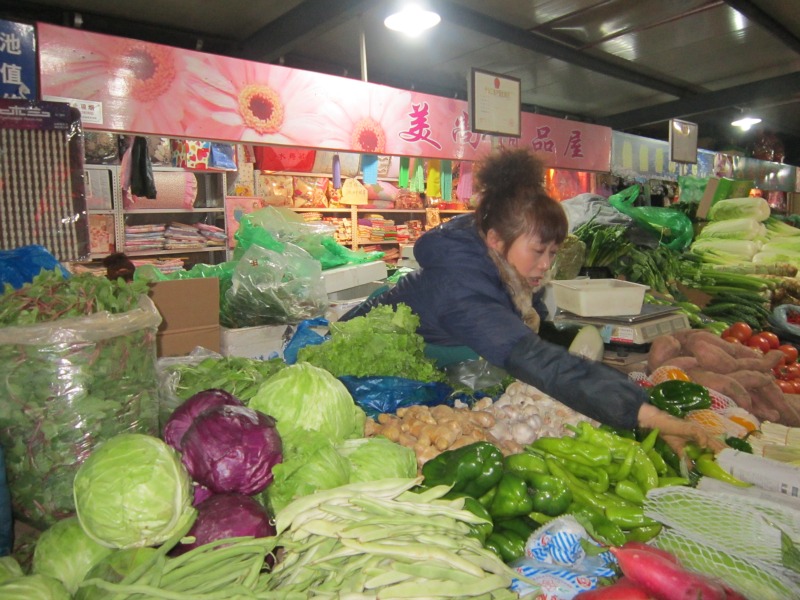
This is our favorite vegetable stand–the one I typically go to unless they’re sold out of something. They sell the best lettuce in the city–a variety hard to find elsewhere. When I asked once about why I couldn’t find this kind of lettuce at other markets, I was told this lady’s brother grows it himself.
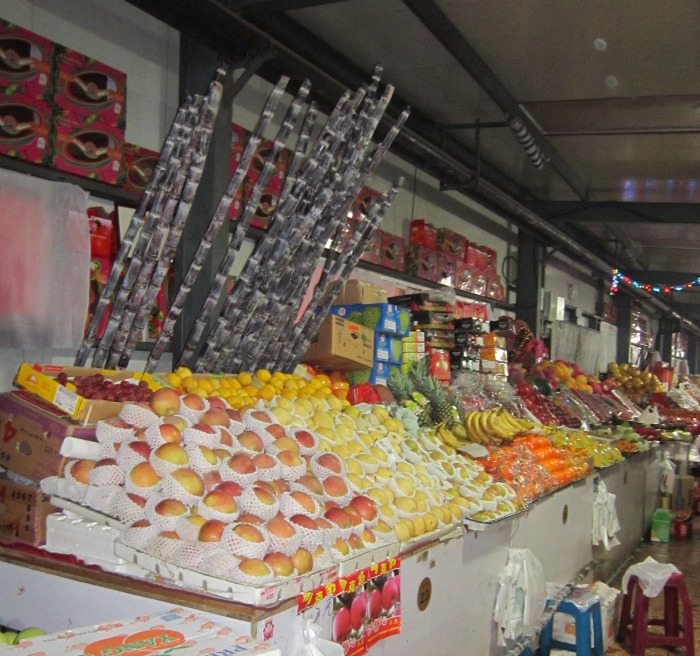
Business was humming at “my” fruit stand, and things were a bit congested, so I took a picture here instead. Sugar cane, anyone? Strawberries are in season at the market right now ($1.60 for half a kilogram for the smaller ones, about twice as much for the big ones). I can buy blueberries, but they’re not in season and quite pricey. Sadly, I’ve never seen raspberries anywhere here, but I can buy mangosteen, pineapple, mango, pomello, starfruit, dragonfruit or kumquats. There’s a lot more variety and availability now than there was even when we first came to China almost five years ago.

There’s much more to tell about market-shopping, so I’ll reserve some of it for next week’s post. Until then,  chūn jié kuai le! Happy Chinese New Year!

{For more Chinese New Year fun, visit my Mandarin 4 Kids video blog at Hold the MSG.com.}

Furniture! At Last!

November 6, 2012 by Carey Jane Clark

I can’t believe it’s November 6th. Probably the only reason I know the date is because Sweetpea’s birthday is tomorrow. I realized today I’m overdue for my Write This Way post for November. (I’ll get that up later this week.)

There has been much activity at our house. We started ESL classes for the neighbor kids a couple of weeks ago, and that’s taken quite a bit of time for me to organize and prepare.

And Thursday last week was a really big day because our furniture finally arrived!

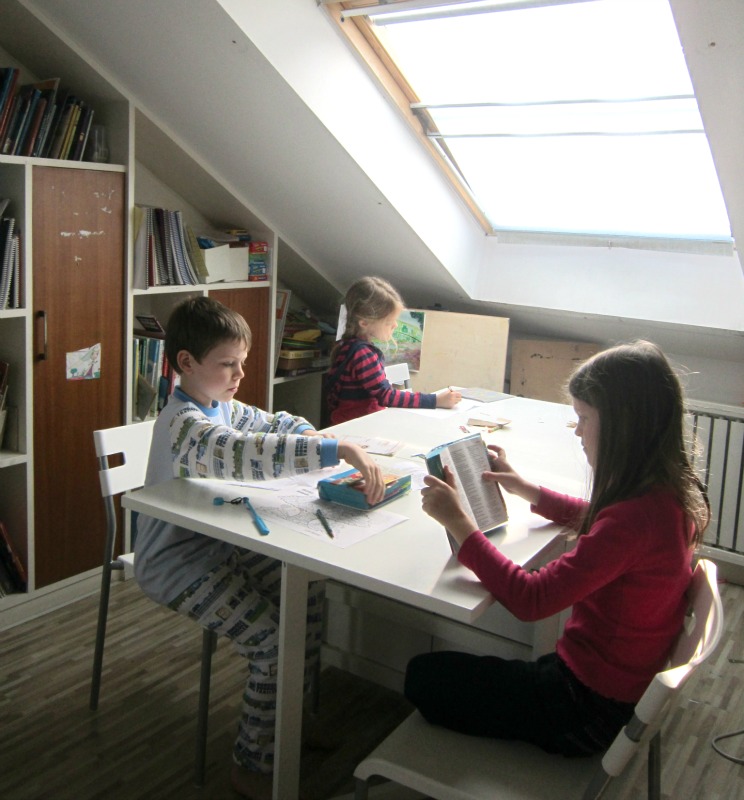
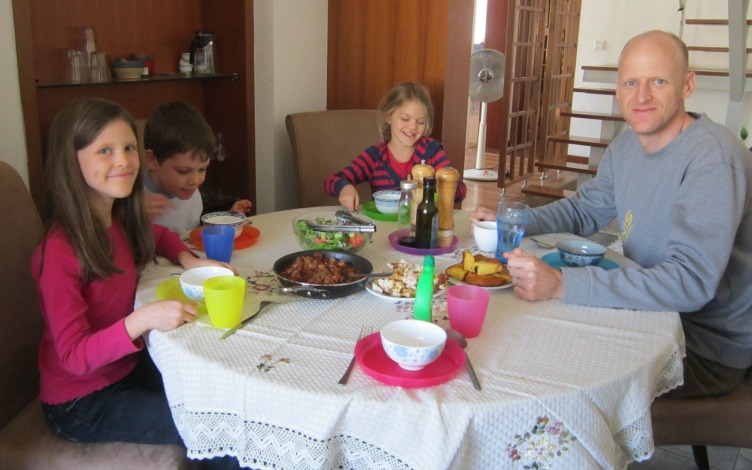
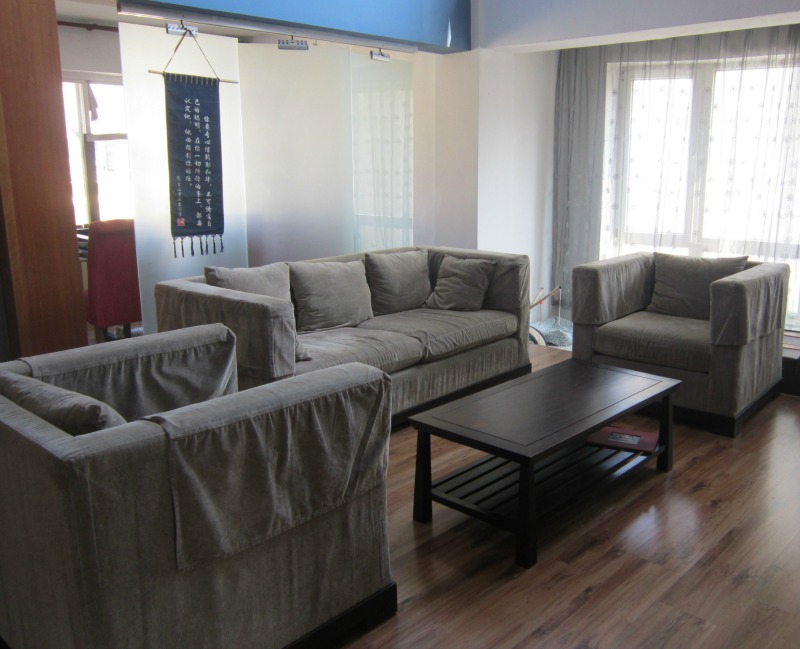
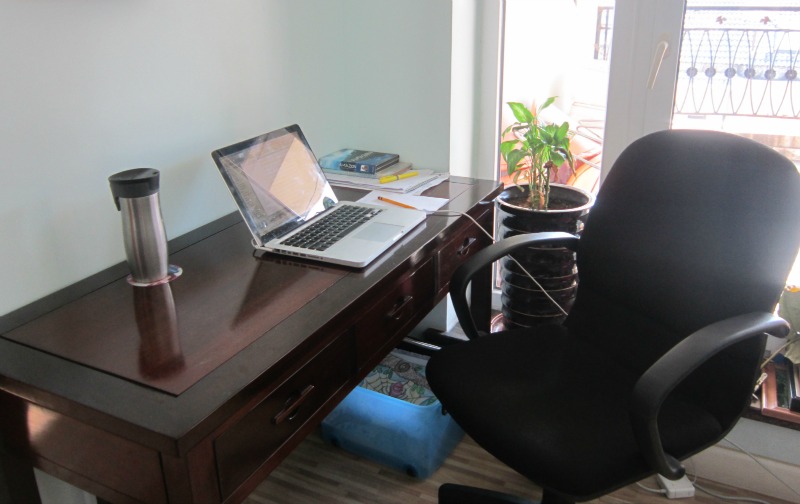
Here are some pictures of my favorite rooms, although every room makes us sigh with pleasure upon walking into it. After seven months sleeping on the floor and crouched around Rubbermaid-type bins pushed together in lieu of a table, we will never again take furniture for granted!

Here is the final edit of the homeschool room (except for the fact that our If/Then Chart has disappeared from the cupboard door behind Pumpkin–anyone seen it?) This space was lovely to work in even with our tiny little table. Now it’s truly our dream homeschool space. Everything is so convenient, we have storage for all our things. Wonderful!

A table! AND chairs! Wow. This is the marvel everyone seems to be appreciating the most. The kids keep remarking about being able to tuck their legs under something and how easy it is not to spill and make a big mess. My biggest thrill is the round table. I grew up eating at a round table. It’s so cozy and conducive to conversation!

Yep. They’re as comfy as they look. Already caught myself snoozing on the sofa.

As wonderful as the rest of the house is, this is perhaps my favorite little corner. It’s where I’ve been hammering out a lot of the words for NaNoWriMo (current count 7041–down a little on my daily count today since I was baking for Sweetpea’s aformentioned birthday).

It’s right next to the homeschool room, so super convenient and my desk matches JavaMan’s–a his and hers set.

A special word of thanks to Home Essentials of Hong Kong for making it all come together.

What a blessing! We are overwhelmed–again!

- Carey Clark

Making Mooncakes

October 9, 2012 by Carey Jane Clark

Last week here in China was Mid-Autumn Festival, also called Moon Festival or “Golden Week.” We spent the whole week visiting with friends. The weather was absolutely beautiful.

Moon Festival lands on the 15th day of the eighth month of the Chinese lunar calendar, so it moves around a bit in terms of where it lands in September/October.

A big part of the celebration of the festival is eating mooncakes. They are a traditional food, which we actually enjoy quite a bit, but we are told that they are kind of like the Chinese version of fruitcake. Not many people actually like to eat it, but everyone takes a bit to celebrate the season.

I thought it would be fun for the kids and I to try to make mooncakes. I spotted mooncake molds at the baking supply store we frequent (an essential stop for buying things like butter, cheese and cocoa at good prices). The store also sold the filling and two essential ingredients that I shopped all over for before I realized they were right back at the store where I bought the molds. Everywhere else, people looked at me strangely when I asked for them. (Not that this is an uncommon experience for me here!)


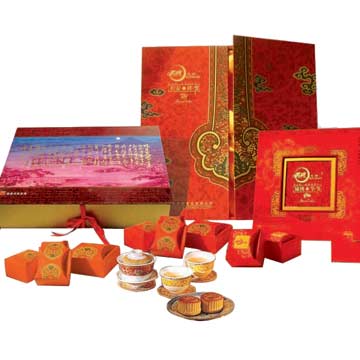
It’s actually rather rare for people to make their own mooncakes. Even my quintessential kid resource on Chinese cultural festivals, Moonbeams, Dumplings & Dragon Boats, which usually offers a recipe to go along with each festival, simply said that most people buy their mooncakes. And in buying mooncakes, presentation is a big part of things. A good quality box of 12 or so mooncakes can run you up to $100 or so. Much of it is about the bling on the box:

I still thought it would be fun to make our own.

Mooncakes vary depending on region, but here in the north, the most popular type of mooncake contains nuts (and that’s our favorite) so that’s the kind of filling I bought. I dug up a recipe for the pastry from an expat forum, and we were in business. [This recipe has now been removed, and I have posted it here.]

The dough is really unusual. The recipe said to mix it in a “large bowl” but when I was only using 100 grams of flour I wondered. Indeed our lump of dough was pretty puny, and instead of making 12 standard mooncakes, it made only 6 small ones (I bought small molds).

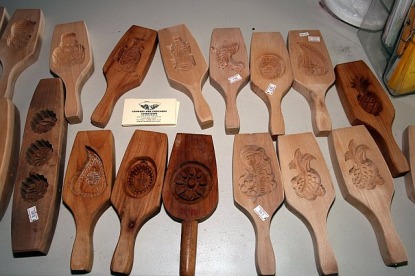
If traditional mooncake molds aren’t a collector’s item, I think they should be. They’re so beautiful:

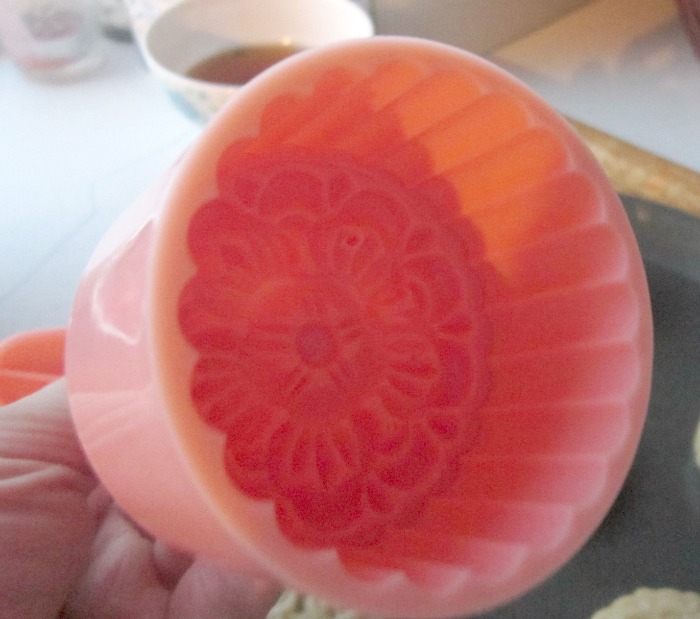
Ours is new-fangled, and spring-loaded, which definitely makes mooncake production easier!

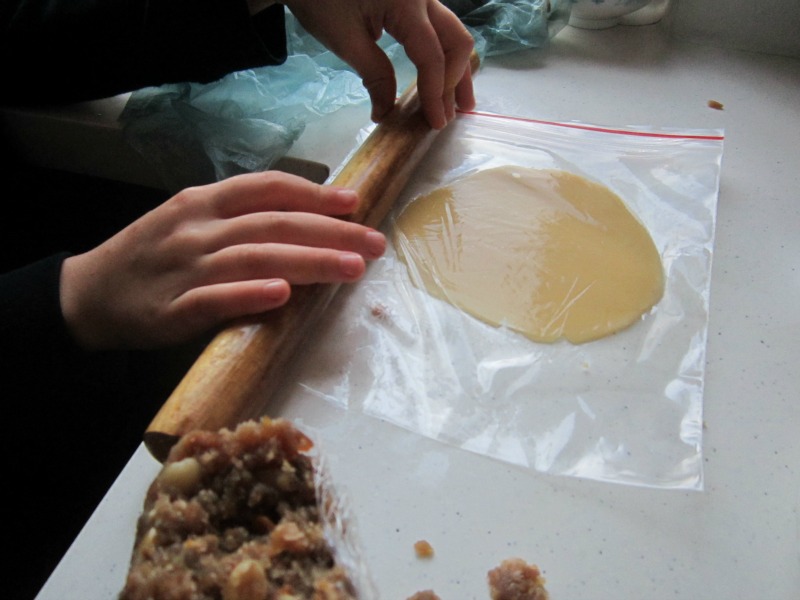
The basic steps began with rolling out the dough, which is sleek and oily-looking, but in reality the oil content is very low (the sugar content, however, is pretty high!). According to Sweetpea, who ate the last leftover bit, it was yummy all on its own. I tried a few first to get the hang of things and then Sweetpea took over:

The recipe says to roll it between “plastic film” but I cut two sides of a ziplock bag, and used it. It stayed put and peeled back much more easily than plastic wrap would have.

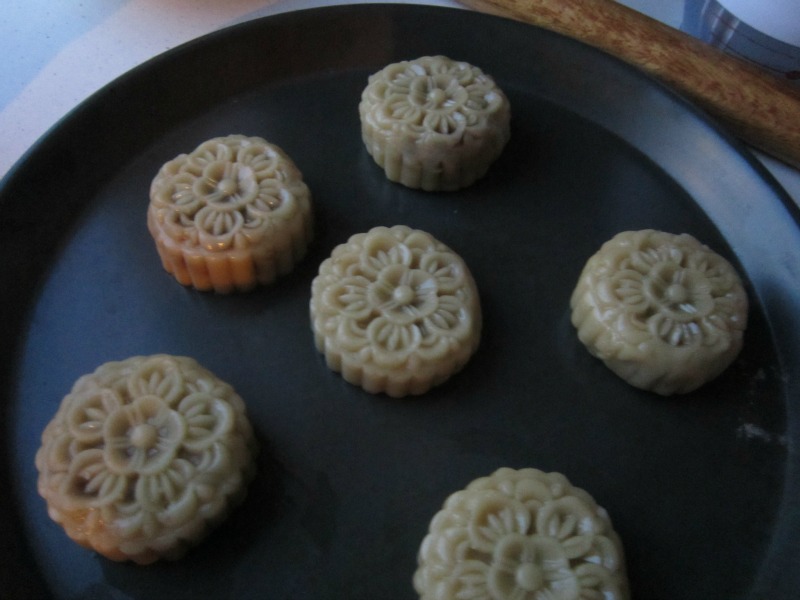
The unidentified lump in the foreground of the picture above is the lump of filling. After rolling out the disc of dough, you form a ball of the filling and wrap the dough around it, then fit it gently into the mold. We pressed down gently on the cookie sheet to make the beautiful pattern on the top, then popped the mooncake out, ready for baking.

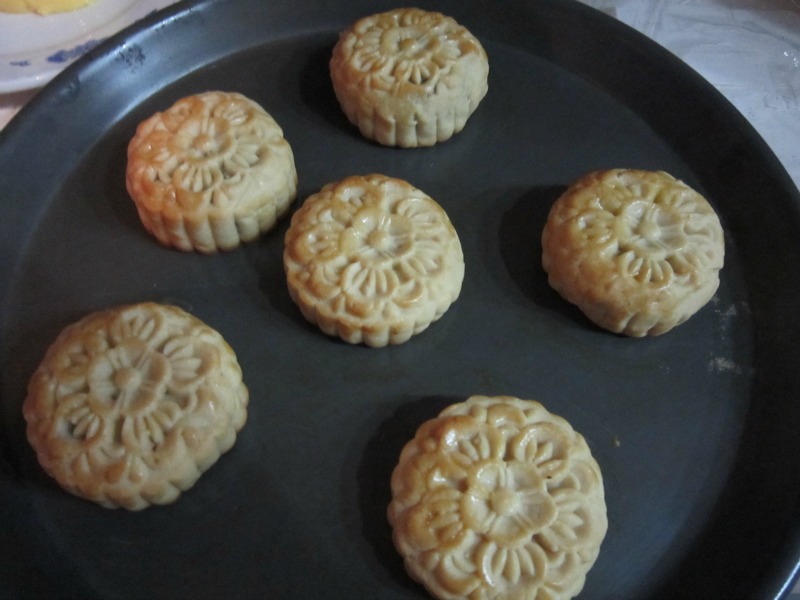
After this, all that’s left to do is bake them for 10-12 minutes. Halfway through the baking time, the mooncakes need to be brushed with an egg wash. (This makes them shiny when they’re all done. I was pretty generous with the egg wash, which was a good call.)

Like fruitcake, the  mooncakes get better if they’re left a couple of days to allow the filling to soften up the dough. But we sampled them right away anyway.

Chinese friends who visited for Canadian Thanksgiving were impressed with my efforts–they’d never seen them homemade before–but upon tasting them, declared they could tell the filling was commercially produced and challenged me to make my own filling next year. They also said I should come up with unique fillings that aren’t as sweet as the traditional ones, because less sweetness is appreciated by the Chinese palate.

We found the process a lot of fun. I think I may be up to the challenge!

- Carey Clark

Chinese Honey

July 3, 2012 by Carey Jane Clark

People who’ve read my blog before (particularly some of the recipes, gluten-free or otherwise) may have noted that we do not bake with sugar. Instead, we’ve always used honey, substituted at 1/2 the quantity of honey for the amount of sugar called for in recipes. It’s an almost fail-proof formula, and we do it in an effort to be healthier.

But honey here is really confusing to buy. There are all different kinds, for varying prices. You can buy creamy honey or clear–of varying shades–honey from different kinds of flowers, honey in the supermarkets, honey in specialty stores.

We always bought our honey here from a lady who sold it by the side of the road. She kept hives and presumably, she was a farmer. This is how we bought our honey in Canada–unpasteurized from a beekeeper.

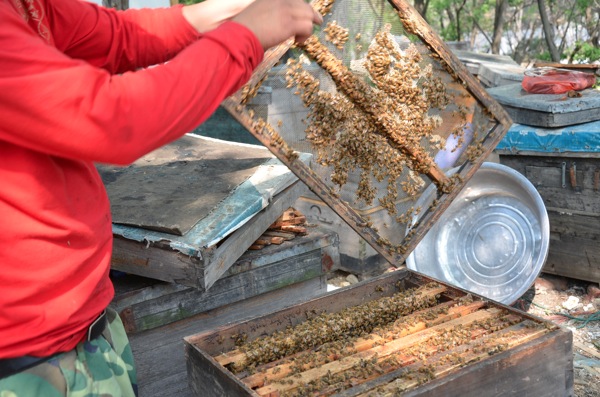
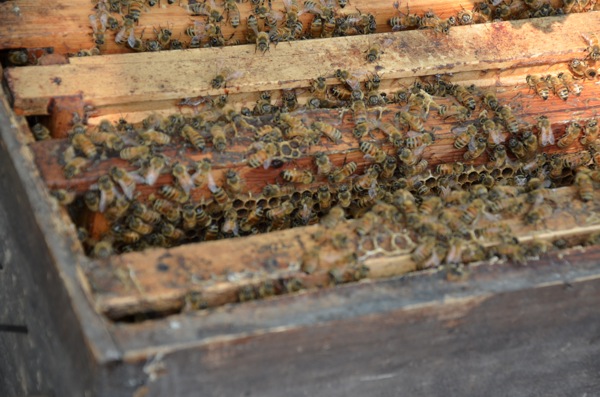
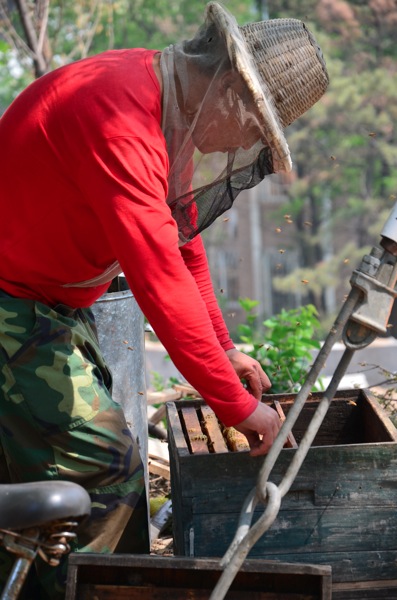
Our “honey lady” has since moved, and I can’t find her, but I thought I’d found someone else. We visited their roadside location, and they let us look inside the hives and told us all we could understand (and a lot we couldn’t) about how the bees make the honey, and how they collect it.


Honey 1


Honey 2


Honey 3

We were pretty excited to find a new source for honey until I learned a few things that gave me some cause for concern.

  1. Some Chinese friends of ours told us they had a concern about the honey here. They don’t buy from the supermarket, because they say the bees that make that honey are fed sugar solution, diluting the quality of the honey. Instead, they travel off into the country, where they have a relationship with a beekeeper. They buy a log that the bees made their honey in for three years, undisturbed by human influence. They bring that honey back to the city and bottle it. One kilogram? $50 (Ack!).

    But it turns out using sugar solution is pretty common, both here and in North America. And there are bigger concerns–some our friends knew nothing about.
     

  2. This article describes some of those problems. Apparently, honey in China has long been a big export, and its quality is in question. Some claim it could be diluted with water or even high fructose corn syrup. Turns out the only way to know for sure if the honey is pure is to have it tested at a lab, where they can determine if any pollen is present or not. This may or may not be a good evaluation of whether the honey is the genuine article or not, since some claim that the absence of pollen is a result of the honey being strained for impurities, to give the consumer the product they expect to see on the supermarket shelves.

    This made us wonder. Did our honey friends extract the honey themselves? Or were they working for someone–someone who might use additives? And what about the antibiotics? Is there any way to ensure the honey we consume isn’t exposed to  that?

We’re not sure about our roadside friends. We do have some concerns about the way their product is stored–in aluminum containers with rusty spigots–so a couple of weeks ago, I found a great source for delicious honey that seems like it’s got to be pure. It’s stored in large stainless steel pots. And she sells the creamy variety (which, incidentally, is amazing on gluten-free bread with ground almonds on top because almonds here actually taste like almonds are supposed to taste–you know the almond extract taste you wondered about).

However, when I returned on Saturday to buy more to make Sprout’s birthday cake (she turns six on Wednesday), the store had moved. I still have a business card, but since phone conversations aren’t my forte, I’ll have to wait until a friend is handy to help me understand where I can find her.

Honey. Seems like it should be simple, but apparently, it’s just one more thing that’s more complicated here than we first thought!

In the meantime, for the cake, I bought honey in a plastic bag (yup) from the same name brand as I found at my new favorite spot. Post about said cake coming up. (There was an amazing cake for JavaMan’s birthday too, with fresh sweet cherry sauce as a topping, but it was consumed before the cameras came out, and thus escaped being blogged about.)

- Carey Clark

« Previous Page
Next Page »
Books
About Carey
  • Email
  • Facebook
  • Twitter

Carey is a participant in the Amazon Services LLC Associates Program, an affiliate advertising program designed to provide a means for sites to earn advertising fees by advertising and linking to Amazon.com. As an Amazon Associate, she earns from qualifying purchases. This site also participates in other affiliate programs and is compensated for referring traffic and business to these companies. This is at no extra cost to you. Thanks for clicking!

Privacy Policy
To Facebook Page

Copyright © 2026 · Beautiful Pro Theme on Genesis Framework · WordPress · Log in

This website uses cookies to improve your experience. We'll assume you're ok with this, but you can opt-out if you wish. Cookie settingsACCEPT
Privacy & Cookies Policy

Privacy Overview

This website uses cookies to improve your experience while you navigate through the website. Out of these cookies, the cookies that are categorized as necessary are stored on your browser as they are essential for the working of basic functionalities of the website. We also use third-party cookies that help us analyze and understand how you use this website. These cookies will be stored in your browser only with your consent. You also have the option to opt-out of these cookies. But opting out of some of these cookies may have an effect on your browsing experience.
Necessary
Always Enabled
Necessary cookies are absolutely essential for the website to function properly. This category only includes cookies that ensures basic functionalities and security features of the website. These cookies do not store any personal information.
Non-necessary
Any cookies that may not be particularly necessary for the website to function and is used specifically to collect user personal data via analytics, ads, other embedded contents are termed as non-necessary cookies. It is mandatory to procure user consent prior to running these cookies on your website.
SAVE & ACCEPT